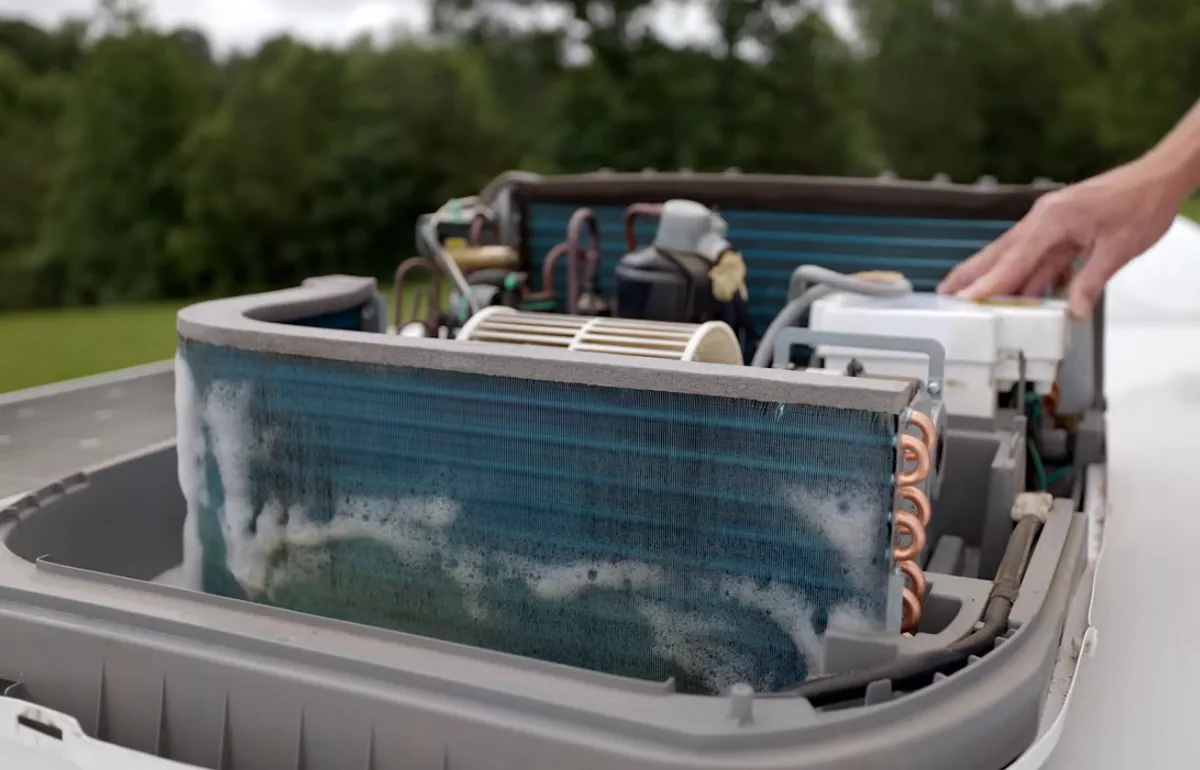
If your RV AC runs but doesn't cool in Miami, check the breaker first (a failing capacitor often trips it). Then check the shore power voltage - low voltage below 108V causes AC short-cycling. If both are fine and the unit hums with no cold air, the capacitor has likely failed. Do not keep cycling the unit. Call (305) 912-8800 for same-day service.
What to Check Before Calling
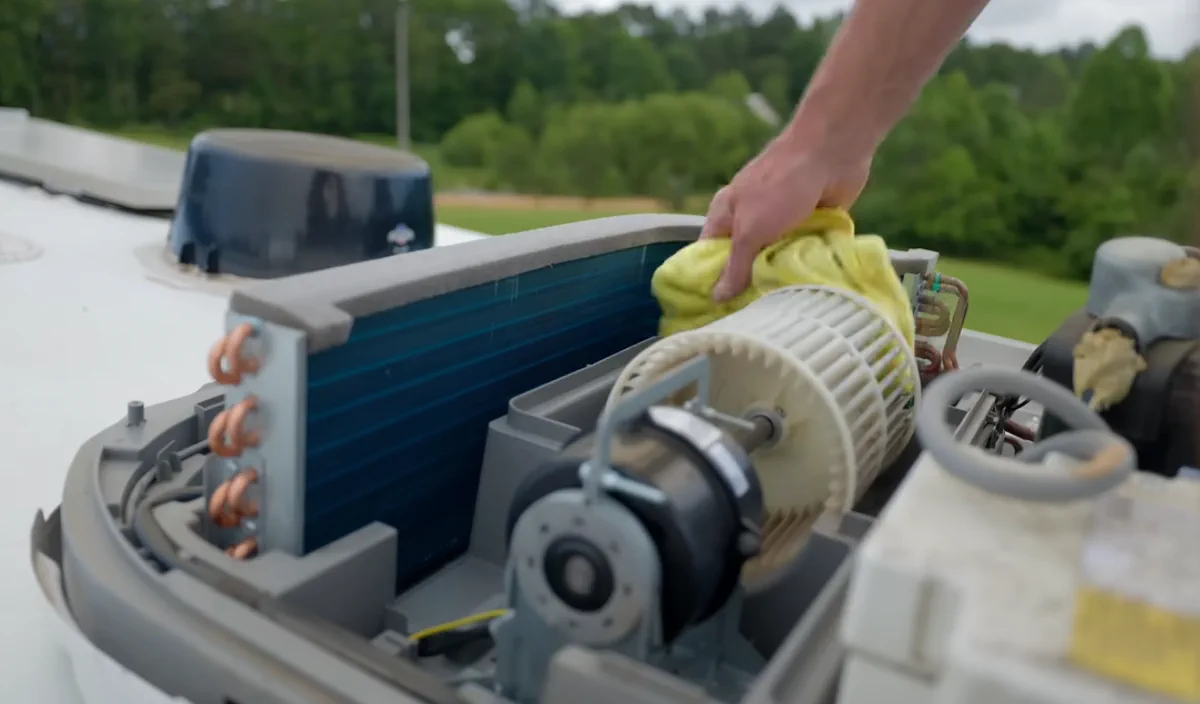
When your RV AC stops cooling in Miami summer heat, the interior temperature can reach dangerous levels within 30 minutes of parking in direct sun. Before calling for service, run through this quick sequence to give us the right information and rule out the cheapest fixes.
Check 1: The circuit breaker. Open your 30 or 50-amp distribution panel and look at the AC breaker. A failing capacitor draws excessive startup current and will trip the breaker before it fails completely. Reset it and observe: if the unit runs after the reset, you caught a capacitor in its last stages. If it trips again immediately on startup, stop cycling - call us.
Check 2: The shore power voltage (if you are at a campground). Plug a voltmeter or a smart surge protector into the pedestal outlet. A reading below 108 volts on a nominal 120-volt circuit will cause AC compressors to short-cycle and stop cooling - this is not an AC failure, it is a pedestal issue. If the voltage is low, request a different pedestal from the campground.
Check 3: The exterior vent area on the rooftop. Walk around your RV and look at the rooftop AC vent grilles on the road side. Leaves, debris, or bird nests blocking the vent grilles significantly reduce cooling capacity. Clear any obstruction and verify the vent fan is spinning.
What the Symptoms Tell You
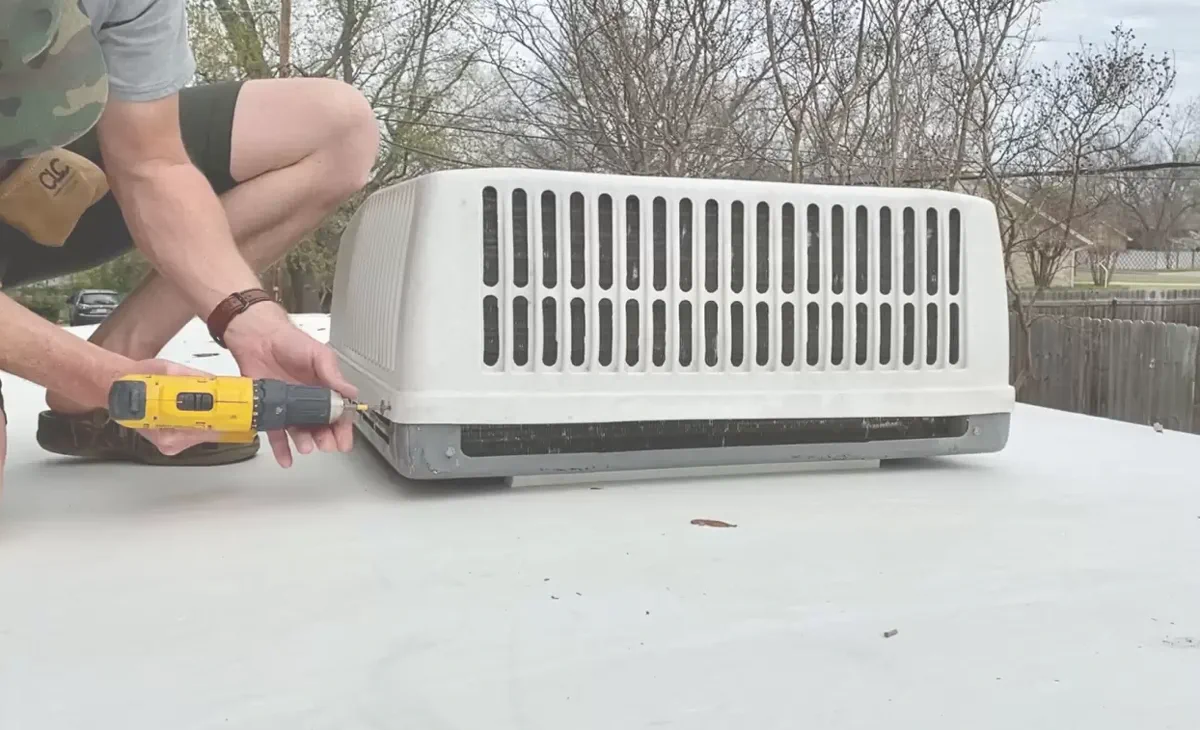
The symptom your unit shows tells us which component to bring on the van. Knowing this before you call reduces diagnostic time and gets you cold air faster.
Unit hums loudly with no airflow at all: Run capacitor failure (61 percent of Miami AC calls). The compressor is trying to start but cannot. The hum is the motor attempting to overcome the reduced capacitor charge. Do not keep cycling - call us for same-day service.
Fan runs, air moves, but air is warm: The compressor is not engaging. Could be a compressor start relay failure, a low refrigerant lockout from the low-pressure switch, or a failed compressor. We need to meter the system on-site to isolate which.
Unit cools for 5-10 minutes then stops: High-pressure cutout triggering from a failed condenser fan motor (the exterior fan on the rooftop). The condenser cannot reject heat without the fan, so the high-pressure switch trips. Motor replacement: $180-280, 2-2.5 hours at your location.
No response at all, unit completely silent: Check the main breaker first. If the breaker is fine, the control board or thermostat has failed. Less common in Miami than capacitor issues, but a straightforward diagnosis with a test meter.
What to Do While Waiting in Miami Heat
Miami summer temperatures in a parked RV can exceed 130 degrees Fahrenheit within 30 minutes. These steps reduce the interior temperature meaningfully while you wait for service.
- Move to shade immediately if any is available. Even partial shade from a single tree reduces heat accumulation significantly in a metal-skinned RV.
- Open all roof vents and at least two opposing windows to create cross-ventilation. Convection moves more air than you would expect.
- Use a 12V or battery fan directed at the vent opening if you have one. A moving airstream reduces apparent temperature by 8-12 degrees.
- Get a bag of ice from a nearby store and place it in a cooler in front of a box fan. This provides meaningful cooling in the interim and costs under $5.
- For occupants with heat sensitivity, elderly passengers, or pets: get them into an air-conditioned building or vehicle while waiting. Do not leave anyone in a non-cooling RV in Miami summer heat.
Why Capacitor Failure Is So Common in Miami
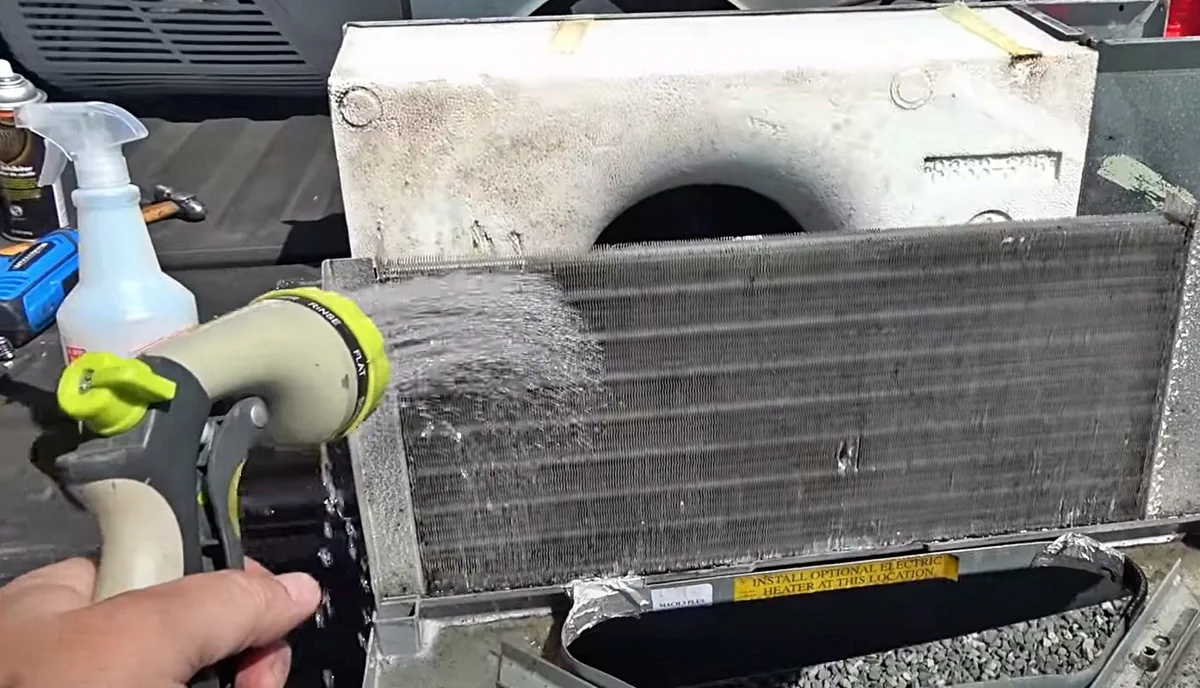
The run capacitor is a simple cylindrical component - typically about the size of a soup can - that stores electrical energy and releases it to provide the extra torque the compressor motor needs to start and run. At room temperature, capacitors last a long time. At 95+ degrees Fahrenheit, the electrolyte inside the capacitor vaporizes faster, the internal pressure builds, and the capacitor degrades chemically at an accelerated rate.
In Miami, the combination of sustained high ambient temperatures (the capacitor is inside the rooftop unit, which is directly in the sun) and the long daily operating hours (Miami AC runs 16-18 hours per day in peak summer versus 6-8 hours in northern markets) compresses what would be an 8-10 year lifespan into 3-5 years.
Annual AC service - which includes a capacitor load test using a specialized meter - catches failing capacitors before they fail completely. A capacitor that reads 15 percent below its rated microfarad value is about to fail. Replacing it at the annual service visit costs the same as an emergency call but happens on your schedule rather than during a heat wave.
When It Is a Heat Emergency
If you have elderly occupants, young children, pets, or anyone with heat-sensitive medical conditions, a failed AC in Miami is a medical emergency, not a scheduling inconvenience. Call (305) 912-8800 and tell us it is a heat emergency. We re-prioritize our dispatch queue for these calls and aim for 2-hour response anywhere in Miami-Dade.
What qualifies as a heat emergency: anyone over 65 in the RV, pets left in the vehicle, anyone with heart or respiratory conditions, or a child under 10. Miami July and August temperatures inside a non-cooling RV reach dangerous levels rapidly. Do not underestimate how fast a 130-degree interior develops.
RV AC Not Cooling in Miami - What to Do - Common Questions
My RV AC hums but no cold air comes out. What is wrong?
Run capacitor failure - the most common RV AC problem in Miami. The compressor is trying to start but the failed capacitor cannot provide the torque needed. Do not keep cycling the unit. Call us for same-day capacitor replacement at your location.
What is the cheapest way to fix a not-cooling RV AC?
Check the breaker and shore power voltage first - free. If both are fine and the unit hums with no airflow, the capacitor has failed. Replacement runs $85-145 at your Miami-Dade location, 45-60 minutes on-site. Call (305) 912-8800.
How long can I stay in a non-cooling RV in Miami summer?
In direct sun, interior temperatures reach 120-130 degrees Fahrenheit within 30 minutes. This is dangerous, particularly for elderly occupants, children, and pets. Move everyone to an air-conditioned space while waiting for service.
Can I fix my RV AC myself in Miami?
Capacitor replacement requires discharging a capacitor safely (it retains a charge even with power off), accessing the rooftop unit, and matching the microfarad and voltage rating exactly. Incorrect capacitor ratings damage the compressor. We recommend professional service.
How do I prevent my RV AC from failing in Miami?
Annual service (capacitor load test, coil cleaning, refrigerant level check) is the most effective prevention. The capacitor test catches failing capacitors before complete failure. Keep the exterior vent area clear of debris and run the AC regularly to exercise the compressor.
Is low shore power voltage causing my AC not to cool?
Possibly. Below 108 volts on a nominal 120-volt circuit, AC compressors short-cycle and stop cooling without actually failing. Check the pedestal voltage with a meter or smart surge protector. If voltage is low, request a different pedestal from the campground before calling for AC service.